Music language
Original cover of The Human Condition

UNIVERSE 01 / 05 SONGS

ENGLISH VOCALS

The Human Condition

The darkness within us.

The Human Condition explores the forces at work inside us and between us: the need for answers, the hunger to consume, the wounds we struggle to name, and the comfort of believing the blame belongs elsewhere. The English edition follows five stories through screens, sleepless searches and rooms where dawn feels a long way off. Familiar scenes begin to reveal something harder to face.

The Need to Know follows curiosity as it turns into an obsession. Vending Machine gives consumption a cold, mechanical voice, while Night Shift moves through a more vulnerable landscape of hidden scars and the search for somewhere safe. The Peak of the Species adds a sharper satire of digital status, paid intimacy and the spectator who condemns the show while renewing his subscription. Anger, suspicion and fragility share the same world, each exposing a different way of losing a part of yourself.

The title track brings those wounds together in the gaze of a spectator. Watching from a distance may feel like innocence, until someone else's suffering becomes entertainment. That uncomfortable shift holds the album together: what drives us, what we conceal, and the responsibility we carry when we keep watching.

Consumption and desireObsession and self-deceptionHidden woundsThe spectator's complicity
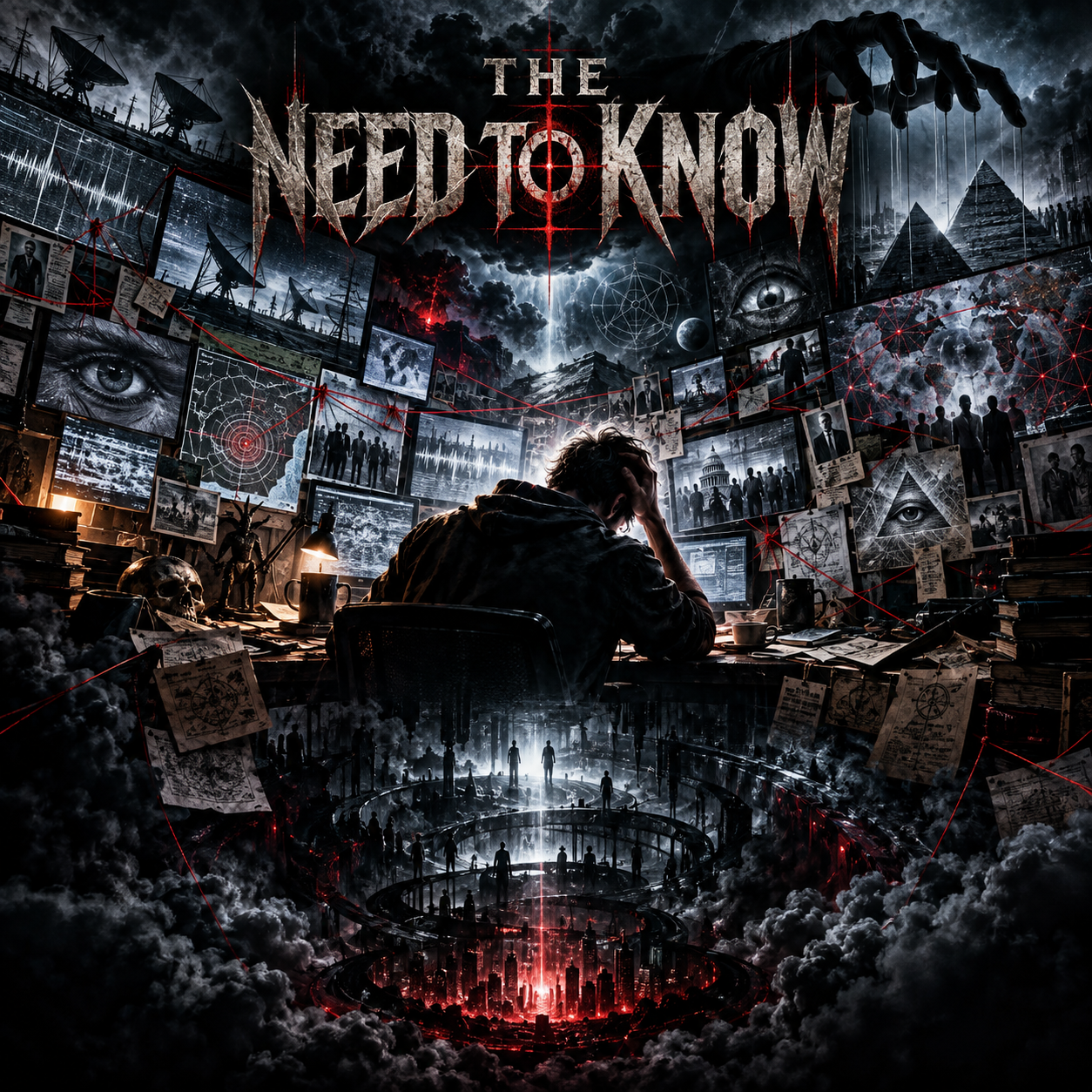
Original cover of The Need to Know

English · 6:25

SONG 01

The Need to Know

One question. Another tab. Another sleepless night.

The Need to Know begins with something found online and a question that refuses to go away. Curiosity leads to one more clue, another date, another connection between headlines. Gradually, the connections take over, and every answer opens another door. The song follows that process from inside the narrator's mind, sharing his fascination, suspicion and growing difficulty in separating what he sees from what he needs to find.

The references in the lyrics form his mental landscape: stories of power, manipulation, crime and conspiracy that keep him searching. Each discovery brings outrage, but it also changes the way he looks at other people and understands the world. The search begins to poison the person pursuing it.

The ending reveals the tension at the heart of the journey: wanting to know and needing to keep living. The song tries to hold on to curiosity without surrendering an entire life to whatever might be waiting in the dark.
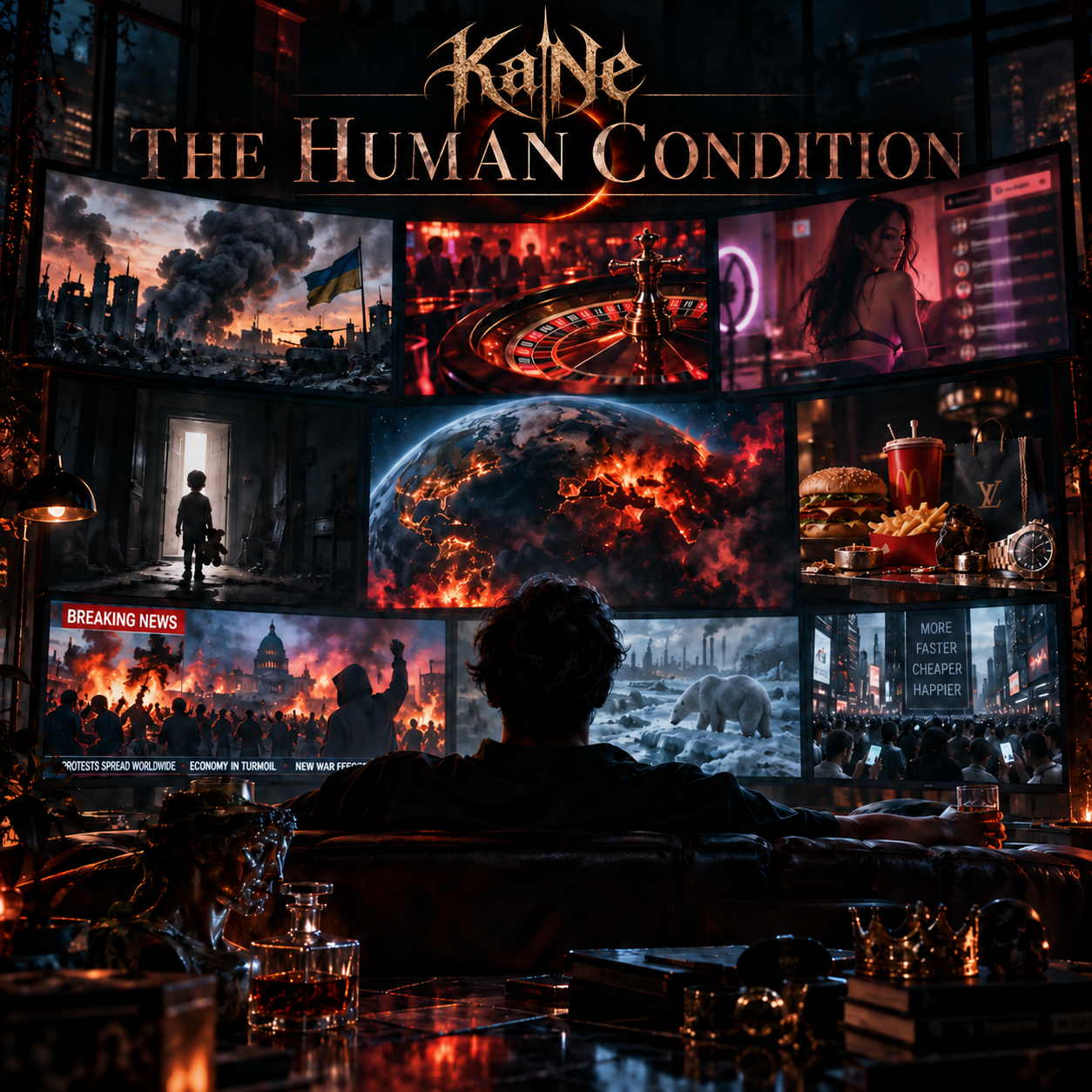
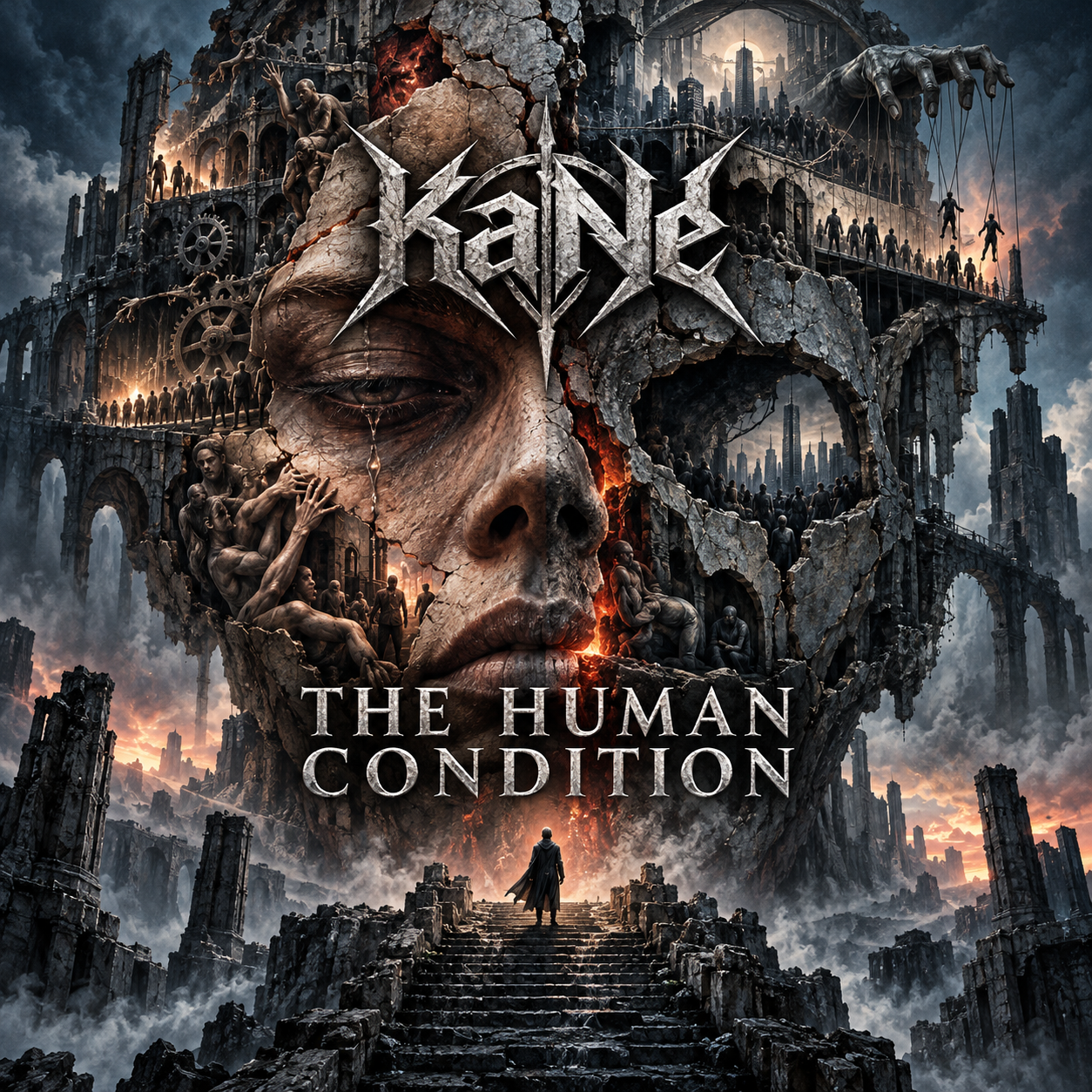
Original cover of The Human Condition

English · 6:18

SONG 02

The Human Condition

The world burns on the other side of the screen.

The Human Condition gathers the album's wounds beneath the gaze of someone watching. War, exploitation, gambling and unprotected children pass before his eyes. At first, he seems to speak from a place of moral certainty, able to survey the damage and name those responsible. That distance becomes unsettling when suffering starts to acquire a strange beauty.

The lyrics move between rented intimacy on a screen, a roulette wheel turning again, and purchased happiness that vanishes as soon as the parcel arrives. Each scene reveals a form of dependence or abuse. Yet the focus gradually shifts towards the spectator, who discovers entertainment and satisfaction in someone else's fall.

The decisive turn comes when blame no longer belongs only to other people. The narrator admits that he passes it on too, learning to keep his own name out of sight. The final image places him on his sofa. He watches the world's pain from there and, although he knows something is wrong, keeps looking. His comfort has become part of the scene.

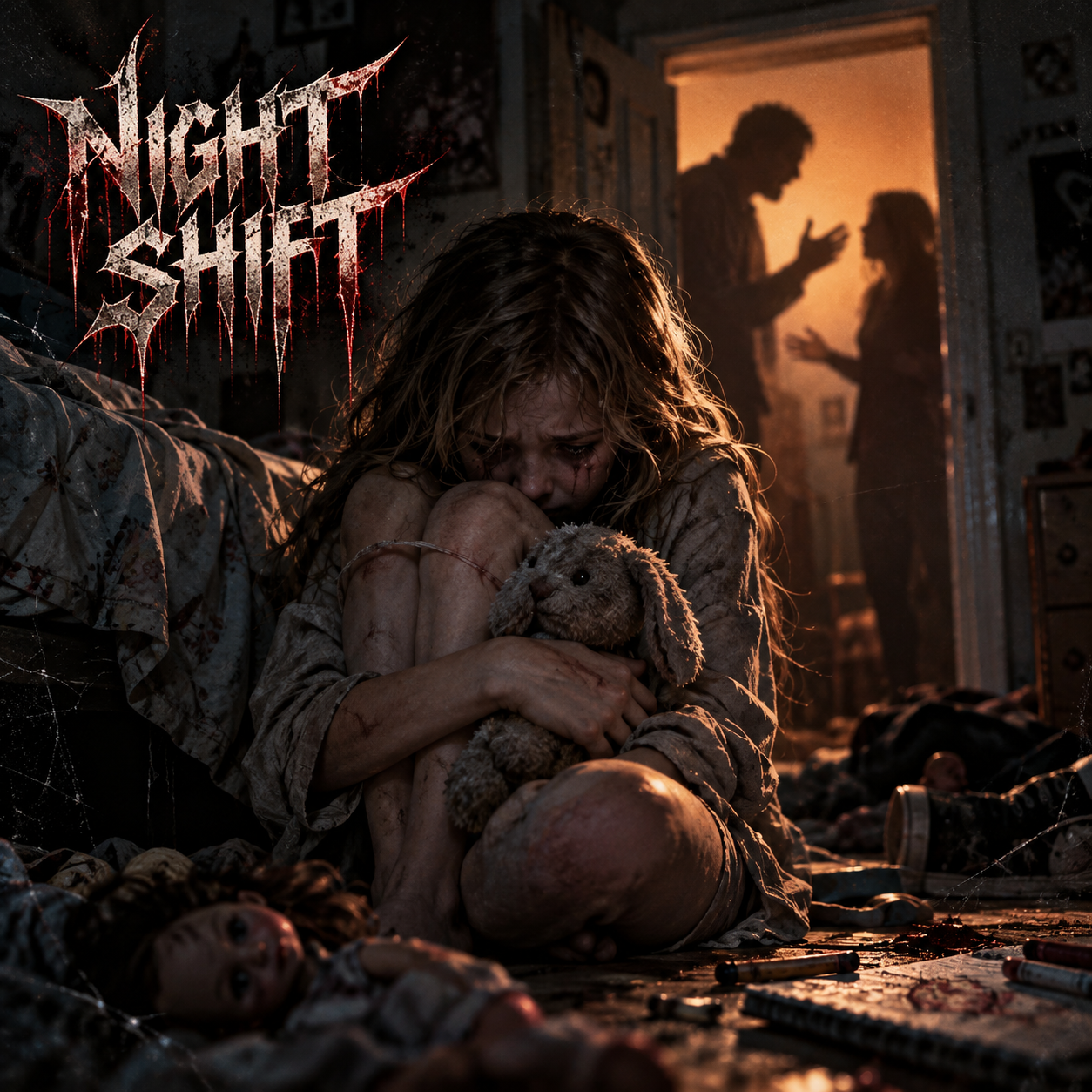
Original cover of Night Shift

English · 5:54

SONG 03

Night Shift

A trembling flame against a night that will not end.

Night Shift unfolds across a night that seems to go on forever: someone behind the glass, pain that will not settle, and the slow counting of hours until dawn. Medication, hunger and chains form a landscape of vulnerability. Morning becomes a distant point to reach, one hour at a time.

The scars that are never shown suggest stories kept inside and the difficulty of letting them out. The people moving through the song search for somewhere safe, but the journey keeps going. Twisted roots and fruit that grew thirsty evoke needs that were never met. The wound travels with the person trying to find rest.

The final verse returns to a threshold that should have been protected and an innocence that lost its shelter. Tomorrow takes the shape of a wounded animal, exhausted from running. The song holds fear beside a quiet kind of endurance: a flame barely steady enough to see, still marking the presence of someone making it through the night.

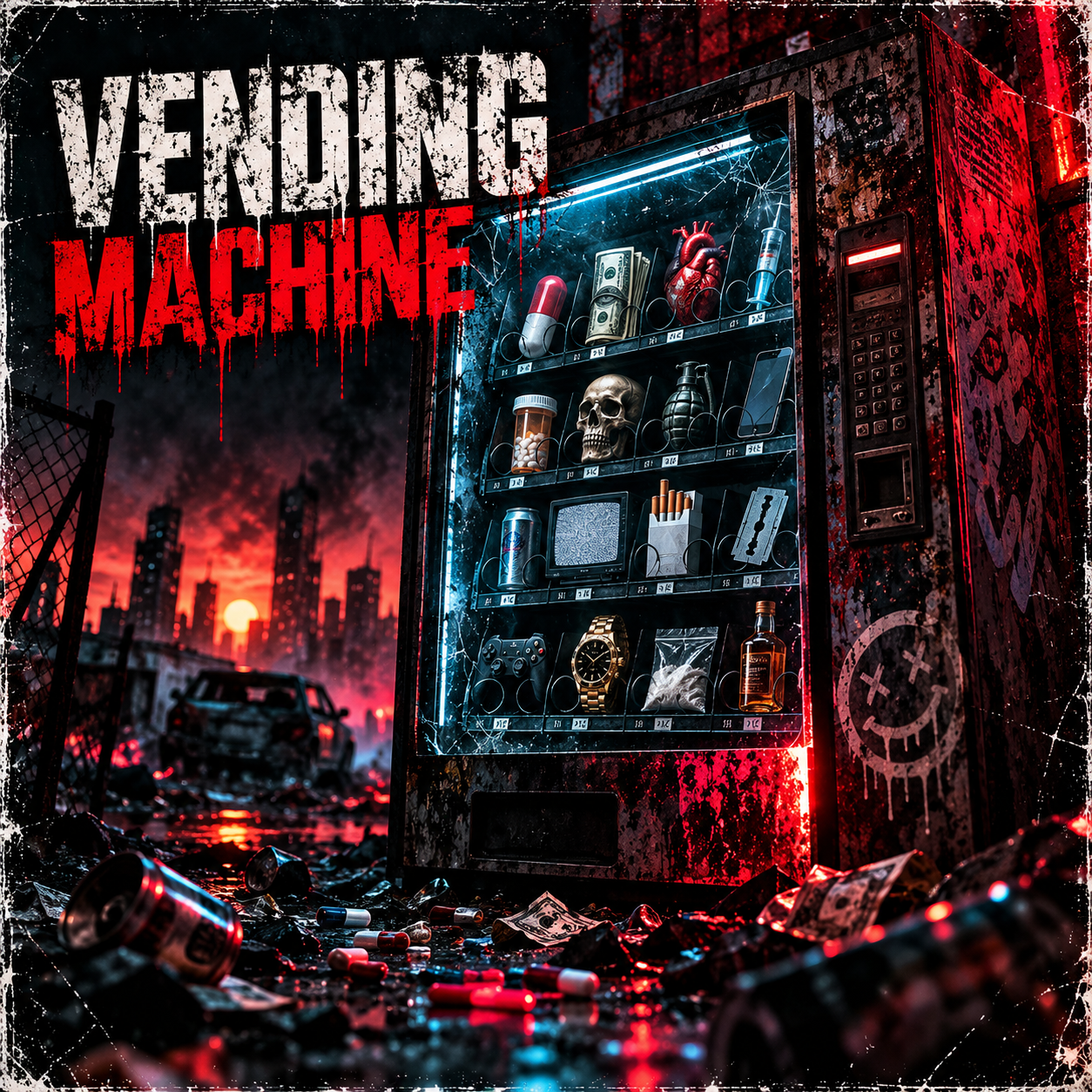
Original cover of Vending Machine · English version

English · 4:17

SONG 04

Vending Machine · English version

Swallow. Stay quiet. Pay. Consume.

Vending Machine imagines a life fed by an endless supply of products and stimulation. The table and the screen belong to the same system: both offer something designed to attract, occupy and create another need. The narrator answers in deliberately abrasive language, turning the consumption of rubbish into an image of being emptied from within.

Manufactured desire lies at the centre of the song. He feels his attention being directed and his choices decided before he makes them. Promises of freedom collide with a routine of shopping, anxiety and growing hunger. Images of glass and waste express the vulnerability of a body caught inside a system he sees as cold, profitable and indifferent.

The accusation eventually reaches those who write the rules and offer reassuring figures. Images of contamination give shape to that distrust. In the breakdown, the song begins to speak with the machine's own voice: swallow, stay quiet, pay, consume. Repeated as clipped commands, those words turn the narrator's anger into a question about how much control he still has over his life.

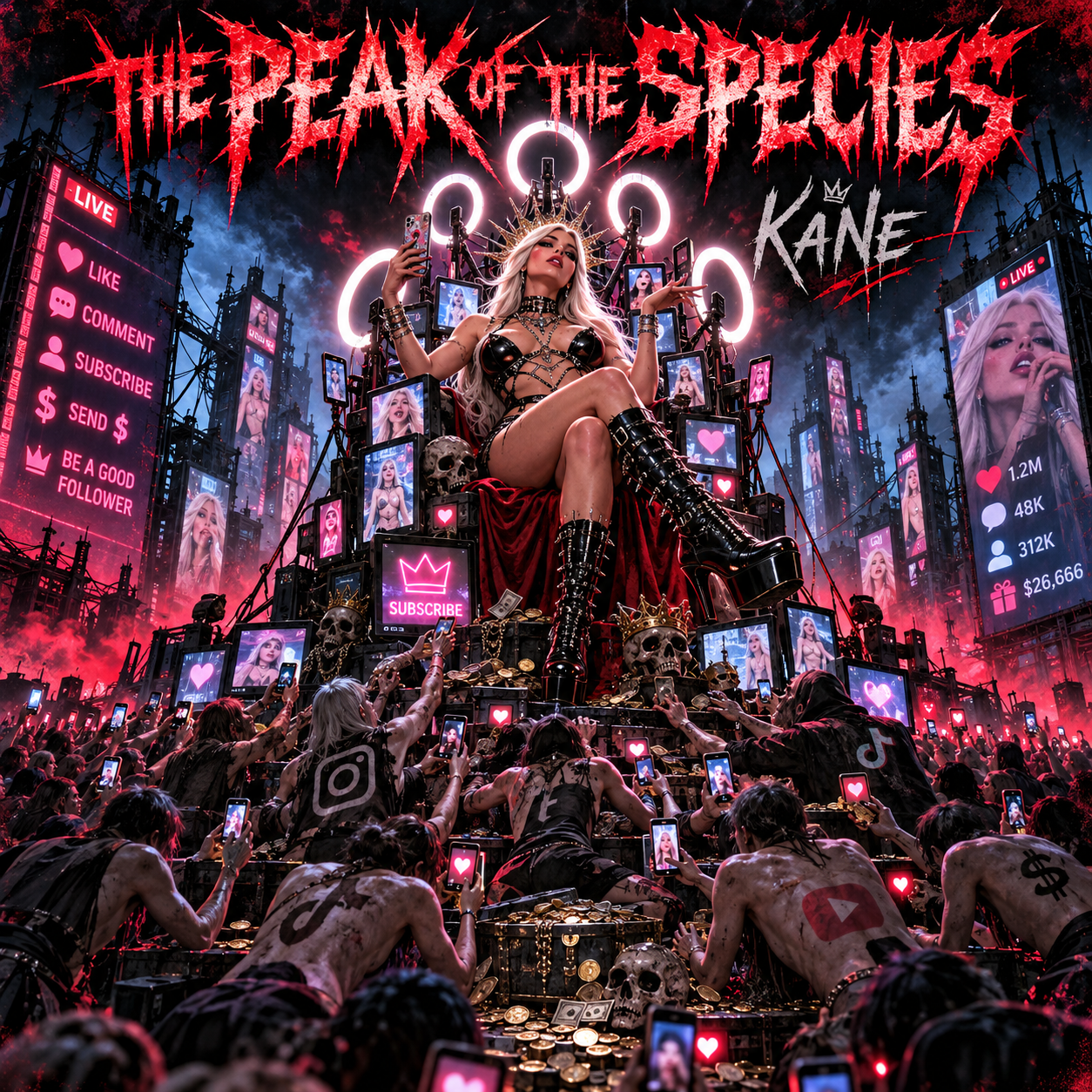
Original cover of The Peak of the Species

English · 4:09

SONG 05

The Peak of the Species

Digital crowns. Real servitude.

The Peak of the Species turns the promise of human progress into a sarcastic spectacle of screens, subscriptions and manufactured intimacy. A crown of ring lights and a throne that folds away announce a kingdom built from attention. When the numbers fall, the performance becomes more revealing. The grand title is deliberately at odds with that small, repeatable routine: a supposed evolutionary summit reduced to whatever keeps the audience watching.

The narrator is part of the transaction. He claims the heart was an accident, posts an outraged comment and keeps the window open. A few tokens buy the feeling of being chosen, and being called a king briefly makes the charges on his bill feel like status. Then the illusion cracks: fifty other kings are receiving the same affection. The crown is digital, but the dependence costs real money.

The final verse brings the contradiction into the open. He condemns a future where youth and attention are put up for sale, demands dignity, and immediately renews his subscription. The song places the performer and the paying spectator inside the same system. Its laughter leaves an uncomfortable question hanging over the last guitar solo: how much of the spectacle survives because the people criticising it keep paying to watch?

BEYOND THE OTHER DOOR

Where Night Takes Form

The darkness we imagine.

YOU ARE LISTENING TO KANE

Listen

If the player is unavailable, you can open the song directly on YouTube.

Open on YouTube ↗