Spanish · 5:24
SONG 01
Zeitgeist
The threads that move the world.
Zeitgeist speaks through someone beginning to question the ideas they once accepted as certain. It opens with three instructions: what to believe, what to fear and whom to hate. From there, the lyrics move through religion, war and money, places where the narrator sees the same mechanism at work: the promise of security in exchange for obedience.
Images of faith and conflict lead to a crowd frozen by horror, then pushed towards revenge. In the narrator's view, fear divides people who might otherwise recognise themselves in one another, while others gain power or profit from the confrontation. The chorus turns that suspicion into a collective cry. Waking up means asking who shapes the story and which emotions they can set in motion.
The bridge introduces a more human question: are we really enemies, or have we learned to treat one another that way? It moves the song from accusation towards the wish for a life without war, fear or division. The ending asks us to hold on to freedom and happiness when the promise of salvation demands that we surrender them.

Spanish · 5:13
SONG 02
El hambre tiene mi cara
The promise of one last bet.
El hambre tiene mi cara enters the mind of someone who still believes he is in control. He watches the other players, considers himself different and shelters behind one word: method. He remembers his wins as proof of skill and leaves his losses out of the explanation. At the table, there always seems to be one more chance.
The song follows what happens when the bet no longer ends with getting out of the chair. The amount owed invades sleep, conversations and the home. Receipts are hidden, excuses are made about payday, and a son receives automatic answers from a father who is no longer listening. Winning back the money begins to mean recovering an image of himself as well.
The promise to win it back and then stop sits at the centre of the trap: it keeps postponing the moment of stopping. When the narrator insists that he is repairing the damage rather than gambling, his self-deception comes fully into view. The hunger in the title now wears his face. The ball lands on zero, and he stays in his seat.

Spanish · 3:13
SONG 03
Como nuevo
Happiness that fits inside a box.
Como nuevo begins with a midnight idea and a need that grows with every search. Three days, thirty tabs and dozens of comparisons turn a passing desire into something that feels essential. When the offer appears, buying almost seems like the sensible decision. The song recognises that familiar piece of reasoning and tells it with affectionate, pointed irony.
Then comes the waiting ritual: tracking, coffee and another look at the tracking. Even the argument with the delivery company becomes part of an anticipation that lasts longer than the enjoyment. The parcel finally opens. There is tinkering, there are forums and tutorials. Once there is nothing left to discover, curiosity fades and the object loses much of its appeal.
A drawer and a listing on Wallapop, a second-hand marketplace, complete the journey of something that promised to change a life and has barely stopped being new. The casual shrug of the chorus lets the narrator recognise the cycle while brushing it aside. The ending starts it all again: there is something else to buy. Happiness lasts only until the next new thing catches his eye.
Spanish · 6:15
SONG 04
Turno de noche
Wounds that cannot find the words.
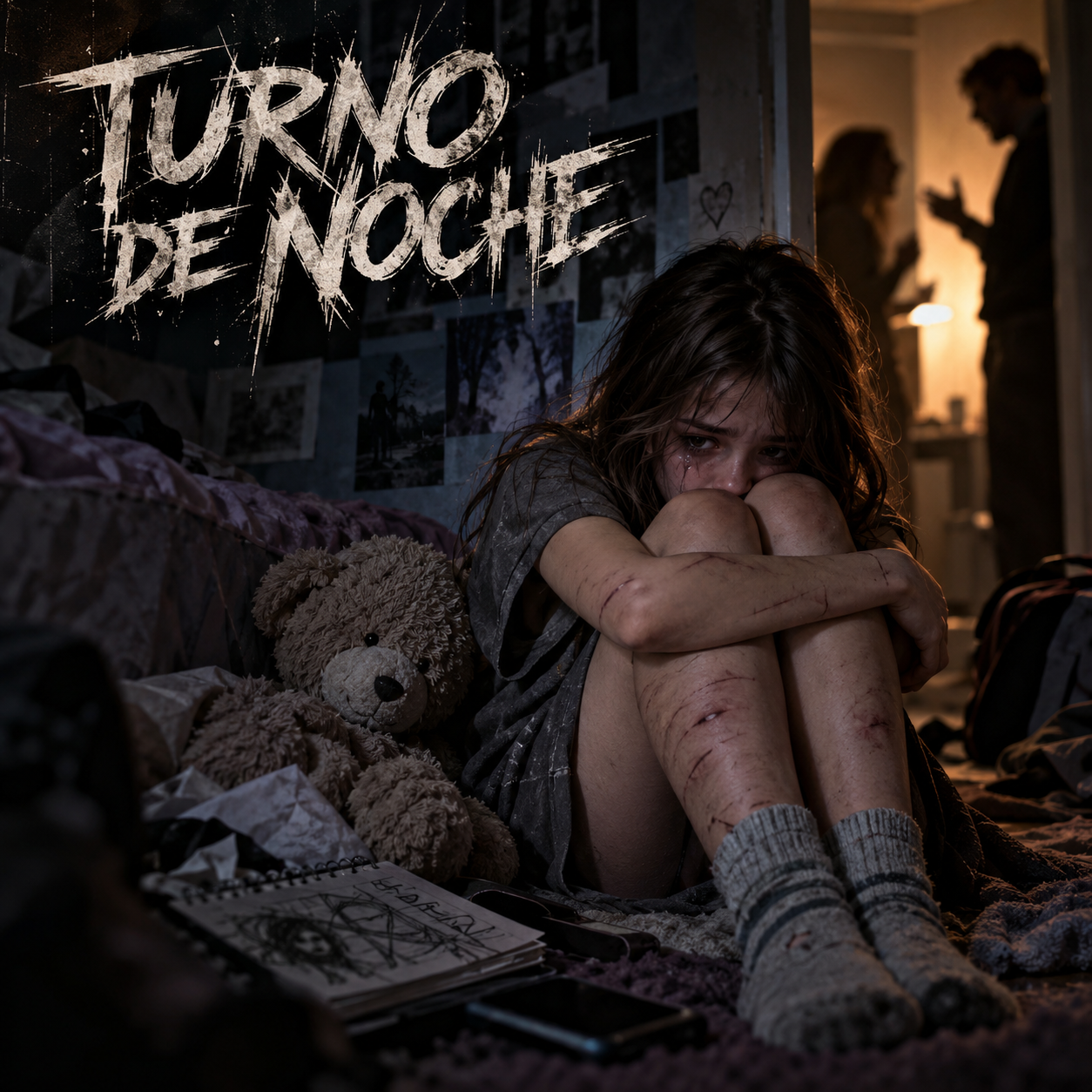
Turno de noche takes place in the hours when pain seems to fill everything and the coming dawn becomes a form of hope. Glass, medication, hunger and chains sketch an experience of vulnerability. The lyrics draw close to someone carrying wounds that are difficult to explain, making their way through the night without enough words for what they feel.
The chorus brings the threat of self-harm together with scars kept out of sight. Behind them are heavy stories that remain difficult to share. The image of a wound travelling from place to place suggests an exhausting search for safety and belonging. Twisted roots and thirsty fruit extend the sense of growing up without receiving what was needed.
The final verse returns to a protection that should have existed: those guarding the threshold stopped doing so. The song keeps that wound within suggestive images, allowing the person to remain more than a single explanation. A trembling flame holds a fragile presence in the middle of winter, while the hours are still being counted until the light returns.
Spanish · 3:58
SONG 05
La Cima de la Especie
A throne built from our attention.
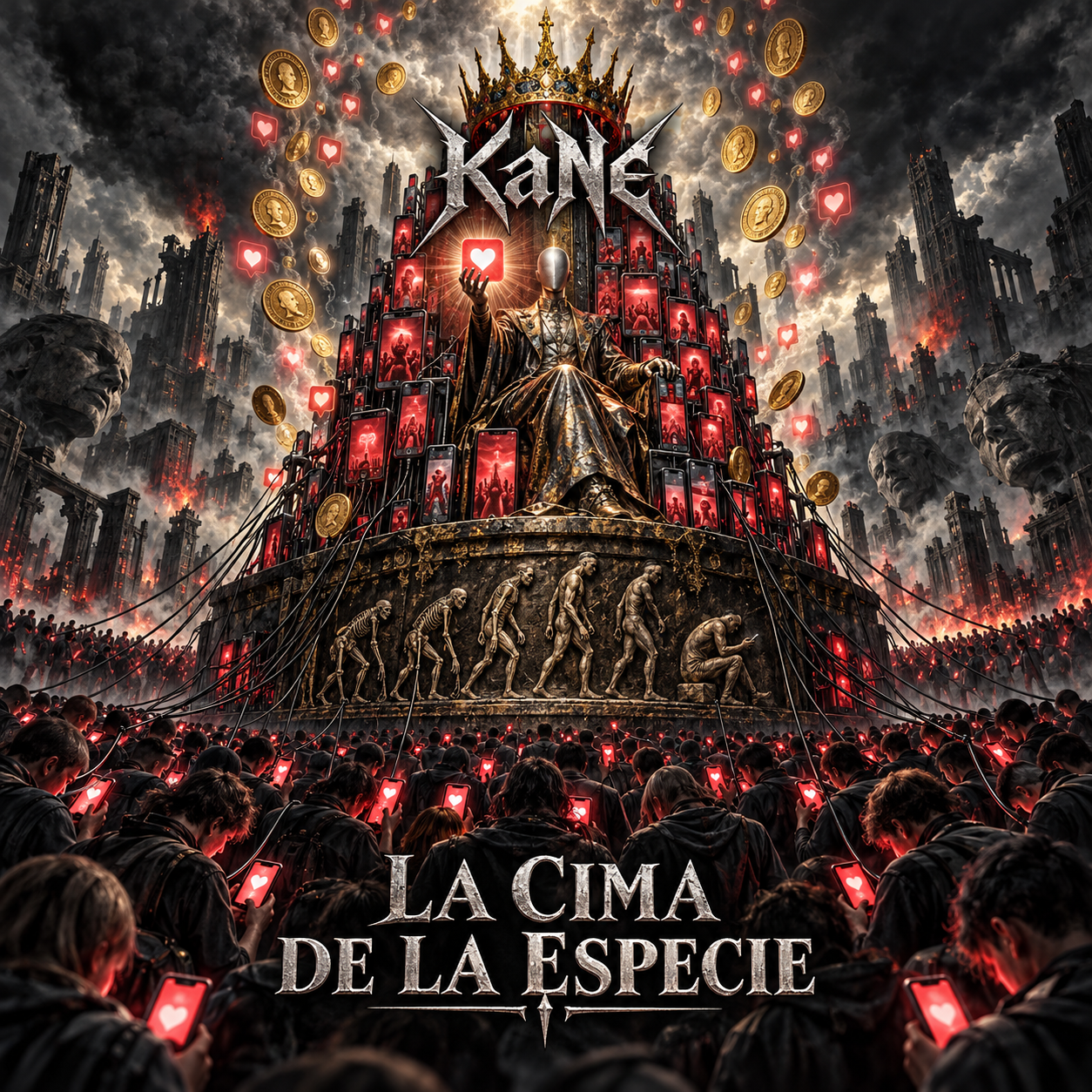
La Cima de la Especie presents the future as a spectacle small enough to fit on a vertical screen. Crowns of lights, folding thrones and recognition that depends on the numbers continuing to rise fill its world. The song exaggerates the scene with an uncomfortable smile: attention has a price, intimacy has a tariff, and a handful of tokens can buy the feeling of being special.
The satire reaches the spectator too. The narrator leaves a heart, writes an indignant comment and keeps consuming. He feels unique when he receives the same affection as fifty others. His small kingdom rests on the charges to his account and a closeness that lasts as long as he pays. The crown is imaginary; the servitude is real.
The final blow lands in that double standard: demanding dignity, then immediately renewing the subscription. The song places the display and its audience, supply and demand, inside the same frame. It reveals a mechanism that makes it all too easy to criticise a spectacle from within it.
Spanish · 4:10
SONG 06
Vending Machine
Swallow. Stay quiet. Pay. Consume.
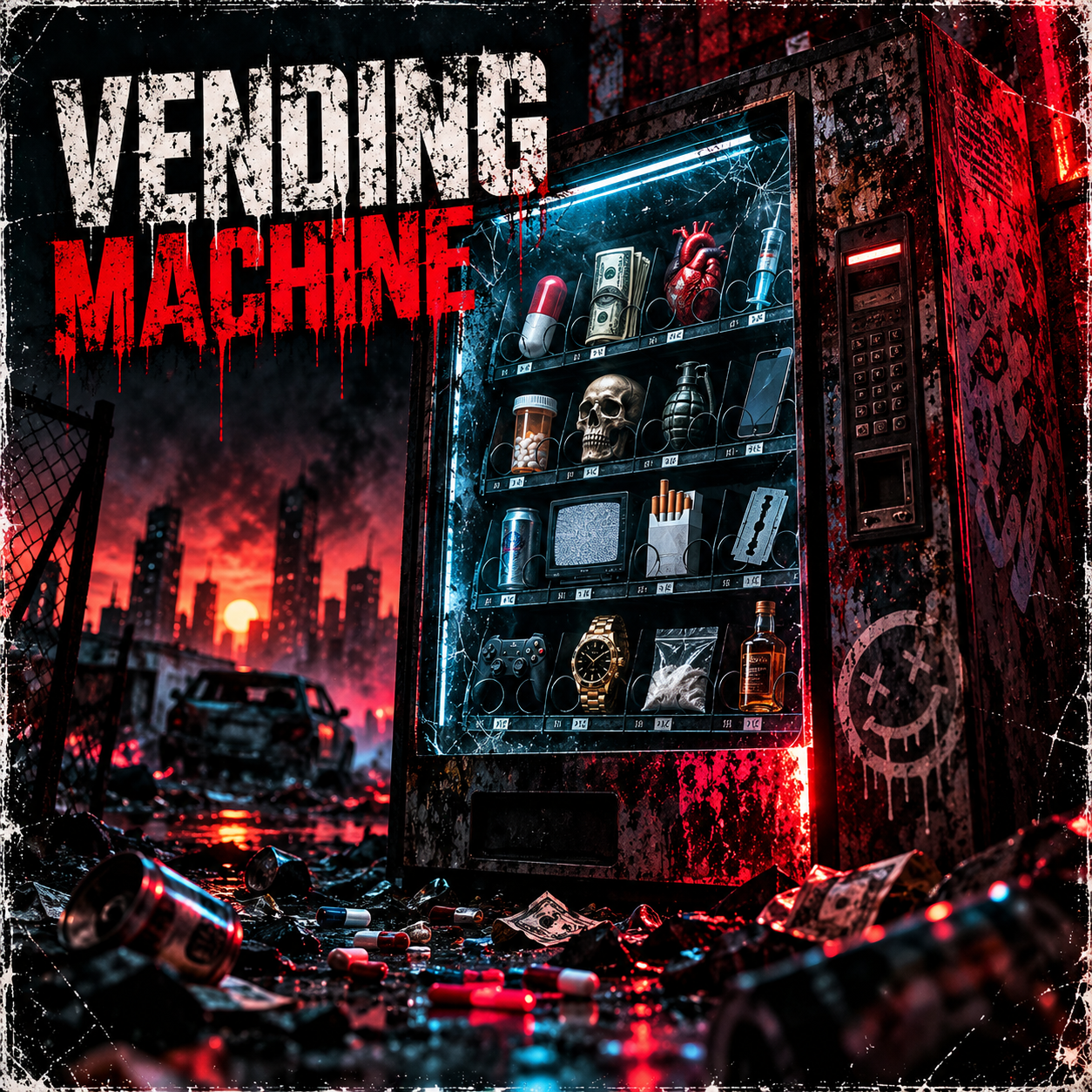
Vending Machine imagines consumption as a machine that never stops serving. Food, images, desires and a ready-to-buy idea of happiness pass through it. The voice of the song gathers that flow beneath one deliberately aggressive word: rubbish. Its accusation connects what enters the body with what occupies the attention and eventually shapes the way we see.
The lyrics distrust a freedom presented as choice while the need to choose is being manufactured. From that perspective, anxiety keeps hunger alive, and every product promises to soothe something the next one will awaken again. Images of poison, plastic and glass express the fear of a life turned into a commercial resource, even when it comes with a reassuring seal of approval.
The final stretch extends the accusation to the rules and speeches that the narrator believes protect this circuit. The breakdown reduces it to four commands: swallow, stay quiet, pay and consume. The repetition imitates a mechanical chain and reveals the meaning of the title: an existence that takes in products and gives back money, while trying to remember how much of its desire still belongs to it.
Spanish · 6:01
SONG 07
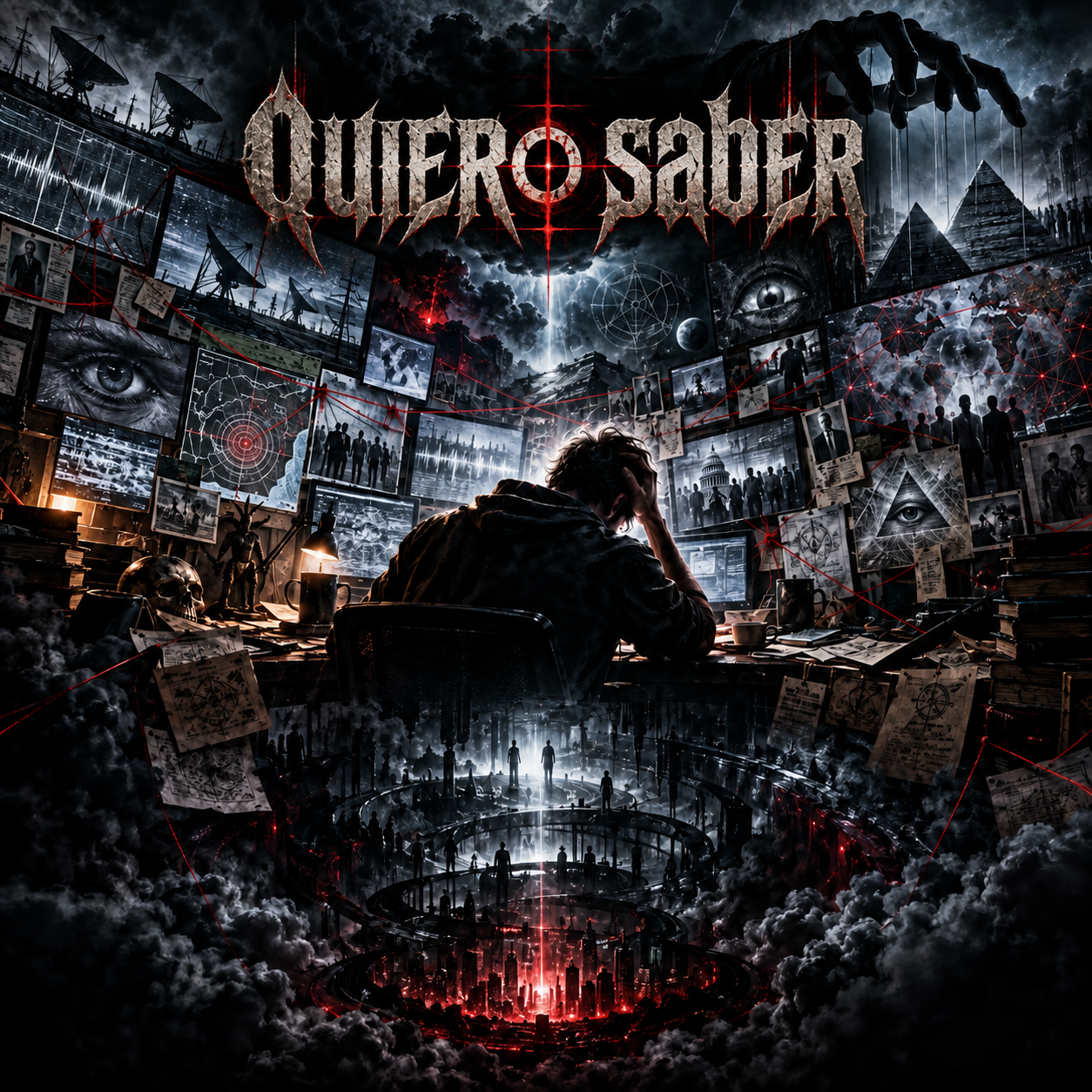
Quiero saber
The need to find an explanation.
Quiero saber follows the need to understand what lies behind the information we receive. It begins with a doubt encountered online. The search links dates, headlines and patterns until every clue seems to lead towards a larger plot. The lyrics follow someone who needs to go deeper, then begins to wonder how much of what they believe really comes from within.
That impulse becomes emotional. The stories the narrator finds stir indignation and fear, followed by a harder question: will so much hatred eventually change them? The references in the lyrics belong to that journey and to the viewpoint of the person living it. The central conflict emerges when the need to understand threatens to take over an entire life.
The ending keeps the search alive while introducing a human limit: being unable to repair the world and needing to remain standing. The wish to know ends alongside the wish to live, two desires the song tries to hold together.
Spanish · 5:49
SONG 08
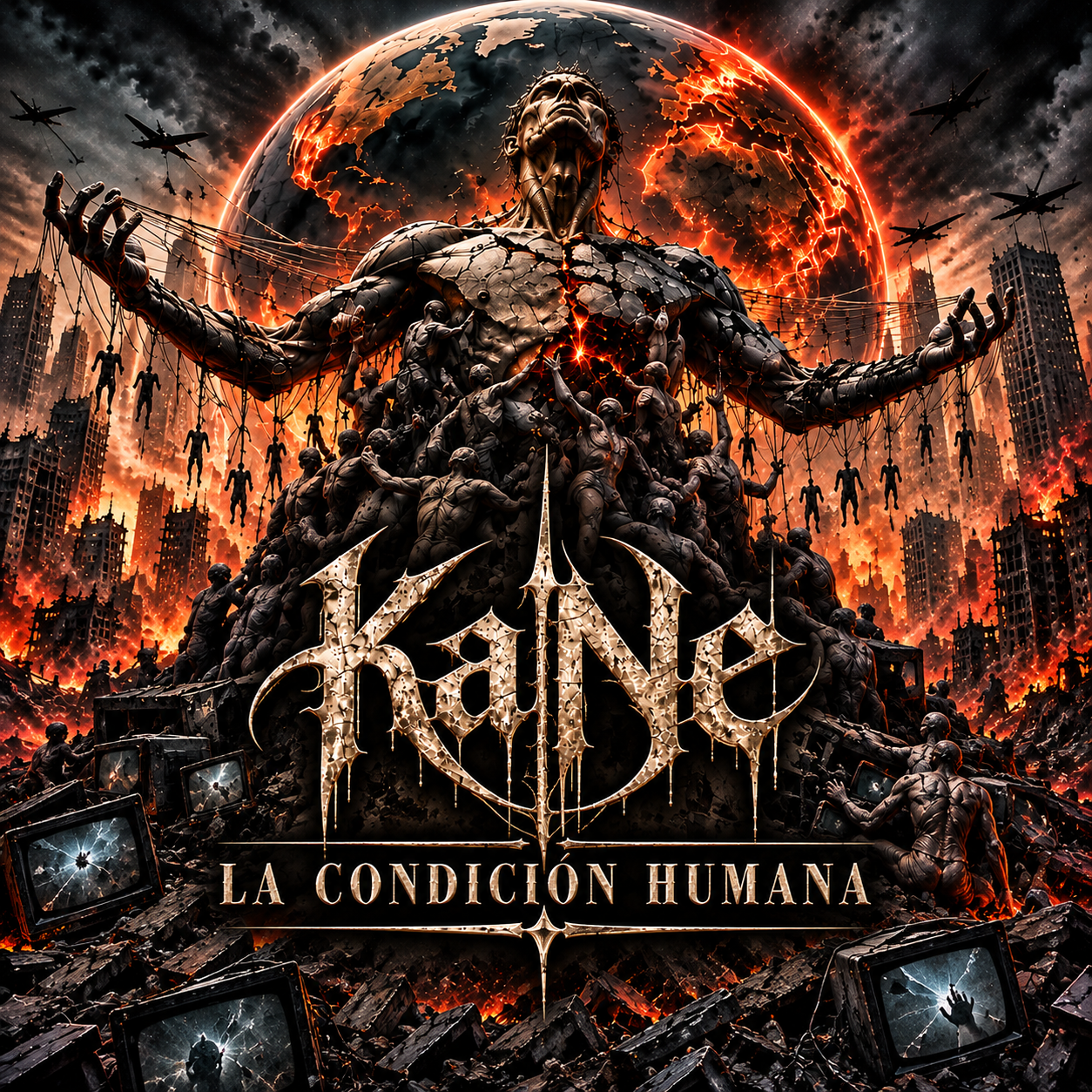
La Condición Humana
The comfortable distance from which we watch.
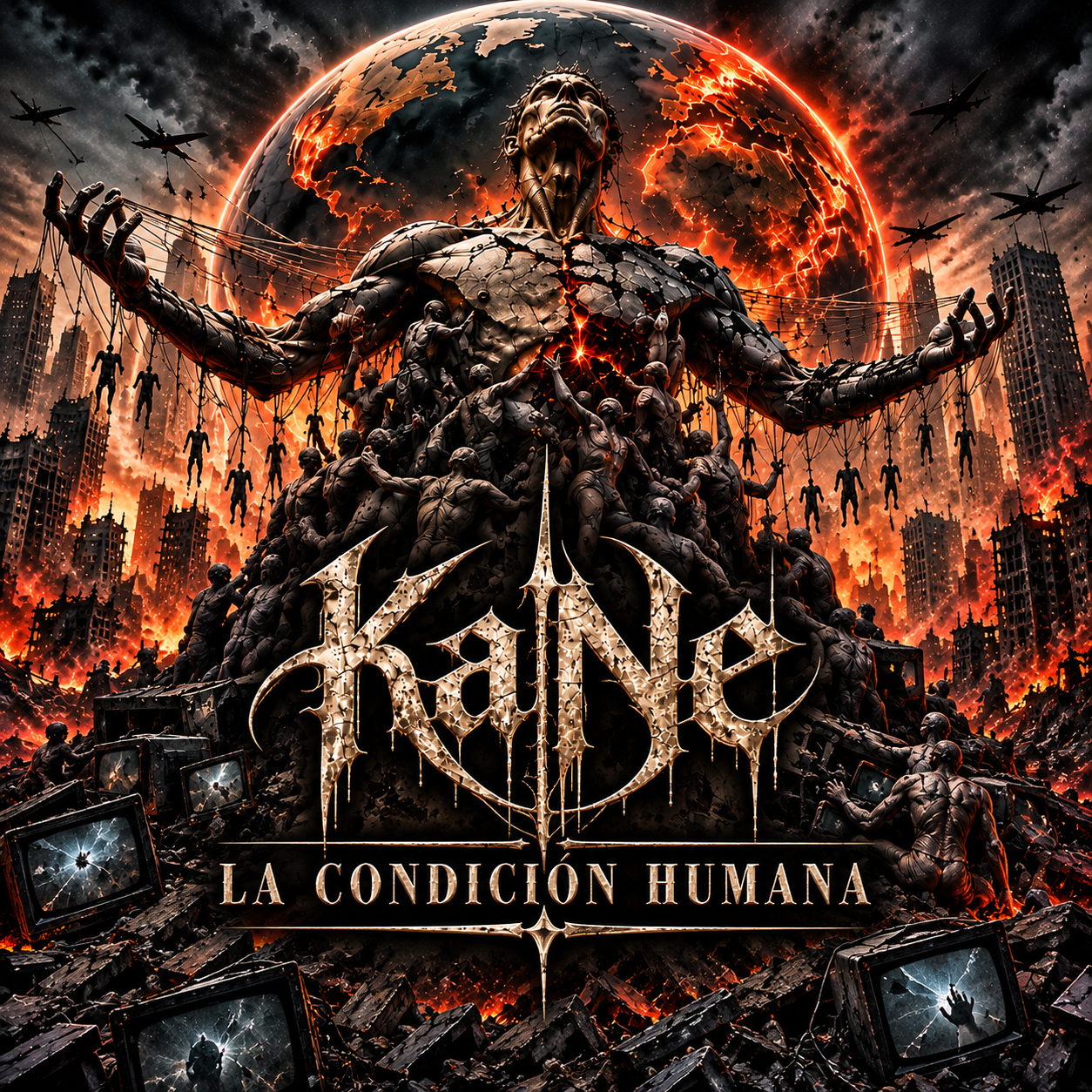
La Condición Humana places its narrator in front of the news, settled on his sofa. From there, he watches wars, gambling, bodies turned into business and children paying for decisions made by others. Distance makes it easy to sort the world into culprits and victims. It also turns suffering into a succession of images he can keep watching without getting up or intervening.
The chorus pushes that contradiction towards a disturbing idea: the human condition seems beautiful as it burns. The lyrics gather scenes from across the album and let them breathe through pauses, silences and repetition. The hunger to gamble, rented intimacy and premium happiness all belong to the same circulation of needs, while everyone finds a way to set their responsibility aside.
The bridge makes explicit what the gaze had concealed: someone else's pain has become entertainment, and their fall feeds an addiction. Then comes the admission that the narrator passes the blame along too. The sofa at the end now means more than comfort. It is the place from which he can feel safe while taking part, as a spectator, in the very things he condemns.